
Oral Paper Presentation
Annual Scientific Meeting



Shilpa Grover, MD, MPH
Brigham and Women's Hospital, Harvard Medical School
Boston, MA
Colitis is responsible for 30% of hospitalizations in cancer patients on immune checkpoint inhibitors (ICI). Identifying patients at high risk of readmission is crucial to improving patient outcomes and reducing health care costs. This study evaluated rehospitalization rates for ICI colitis and risk factors for readmission.
Methods:
This was a retrospective cohort study of adult cancer patients who received ≥ 1 dose of an immune checkpoint inhibitor between 2011 and 2022 and were hospitalized at our institution for biopsy-proven ICI colitis. Rehospitalization was defined as admission for recurrent colitis within 6 months. Univariable and multivariable logistic regression analyses were performed to evaluate the association between rehospitalization and clinical/treatment characteristics.
Results:
Of the 129 patients hospitalized for ICI-colitis, 50 (39%) were readmitted for colitis, a median 13 days (IQR 22) post-discharge. Of the 79 patients in whom a biologic was required for ICI colitis, 36 (46%) received it immediately prior/during their first hospitalization and 43 (54%) subsequently (table 1). On multivariable logistic regression analysis, after adjusting for diarrhea grade, endoscopic severity, and histology (table 2), biologic use, high-dose glucocorticoid use, and time from grade 1 symptoms to discharge were significant predictors of readmission for ICI colitis. Compared to those who required < 2 mg/kg of steroids, those that required ≥2 mg/kg were 3.8 times more likely to require readmission (OR 3.8, 95% CI 1.4, 11.3). Compared to patients who never needed a biologic, those who received biologics before/during their first hospitalization were not at an increased risk of rehospitalization. However, those who received biologics after their first hospitalization had a 9-fold higher risk of readmission (OR 9.3, 95% CI 2.1, 49.8)
Discussion:
This is the first study to identify independent predictors for ICI colitis readmission. The high rates of readmission for ICI colitis underscore the impact on patients and healthcare systems. The use of high-dose glucocorticoids as a predictor of readmission highlights the need for earlier biologic use rather than steroid escalation in patients who do not respond to lower doses. Our results also support the need to ensure a sustained treatment response prior to discharge. By guiding management, these insights have the potential to improve patient outcomes and mitigate the risk of rehospitalization.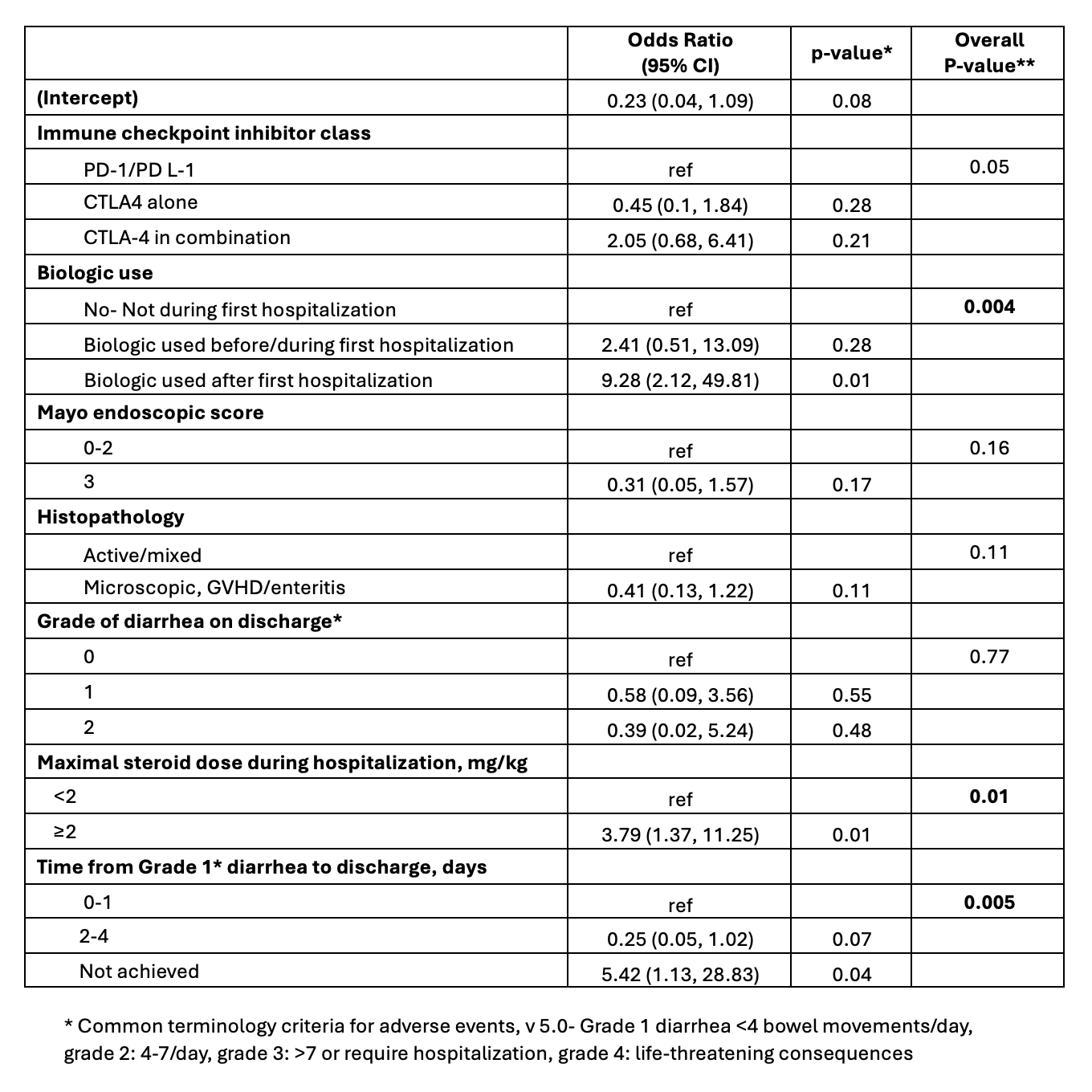
Figure: Table 1: Univariable Association Between Clinical and Treatment Characteristics and Rehospitalization Status In Patients Hospitalized for ICI Colitis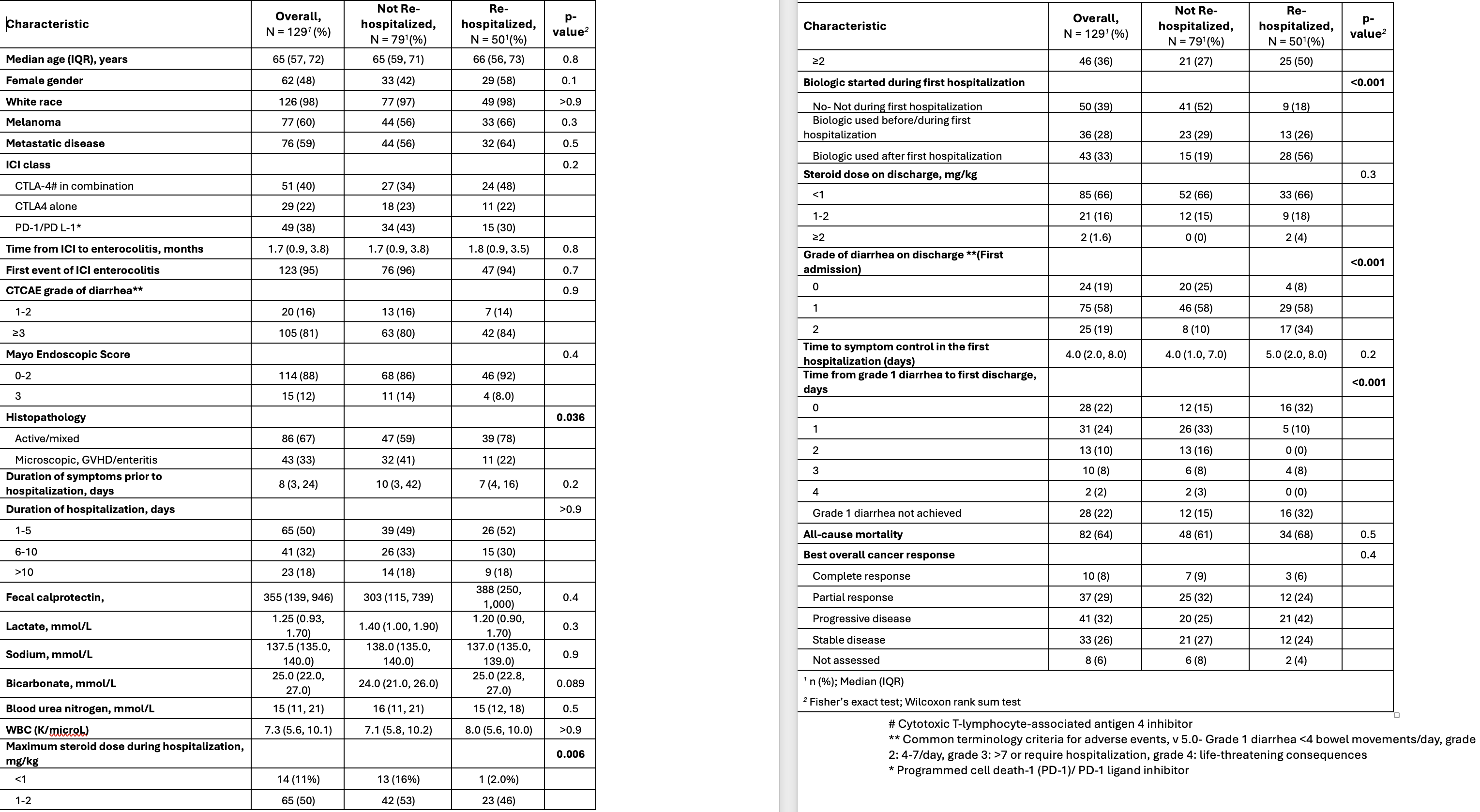
Figure: Table 2: Multivariable Logistic Regression Analysis of Independent Predictors of Rehospitalization for ICI Colitis
Disclosures:
Aakash Somappa indicated no relevant financial relationships.
Joel Joseph indicated no relevant financial relationships.
Mofei Liu indicated no relevant financial relationships.
Anita Giobbie-Hurder indicated no relevant financial relationships.
Jordan Sack indicated no relevant financial relationships.
Shilpa Grover: Takeda – Grant/Research Support.
Aakash Somappa, MBBS1, Joel Joseph, MBBS2, Mofei Liu, MSHP3, Anita Giobbie-Hurder, MS3, Jordan S. Sack, MD4, Shilpa Grover, MD, MPH4, 20, Predictors of Rehospitalization in Patients With Immune Checkpoint Inhibitor Colitis, ACG 2025 Annual Scientific Meeting Abstracts. Phoenix, AZ: American College of Gastroenterology.