
Endoscopy Video Forum
Annual Scientific Meeting

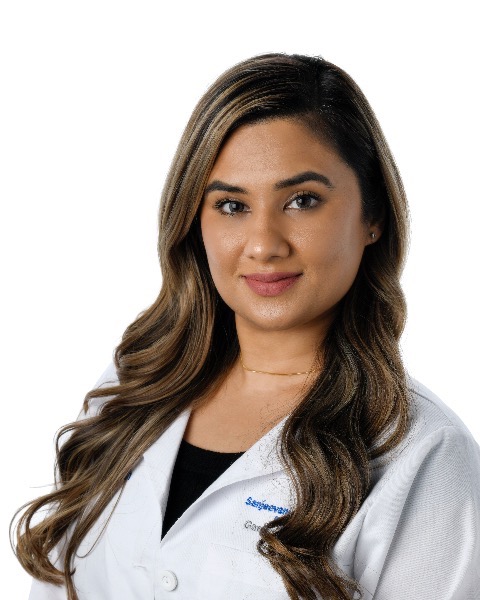
Sanjeevani Tomar, MD
AdventHealth Orlando
Orlando, FL
Case 1 involves a 40-year-old female with rectal cancer and liver metastases since 2022, treated with low anterior resection and right hepatectomy in 2023. She presented with recurrent bleeding from her ileostomy. A failed ileostomy reversal in 2024 revealed parastomal varices. After failed conservative management and multidisciplinary discussion, she was referred for EUS-guided therapy.
Case 2 features a 62-year-old female with sigmoid cancer treated with colostomy in 2017 and liver metastases managed with right hepatectomy in 2019. She had recurrent colostomy bleeding, previously treated with IR-guided embolization and coiling. She was referred for EUS-guided therapy after further multidisciplinary review.
In both cases, endoscopy identified feeding vessels to the varices. Using a 19-gauge needle, the vessels were accessed and contrast injected to confirm location. Embolization coils were deployed based on vessel diameter, followed by thrombin/fibrinogen injection. Post-procedure Doppler confirmed successful obliteration.
Both procedures were technically successful without complications. In Case 1, no further bleeding occurred. Hemoglobin initially improved to 11.7 g/dL but later declined, likely due to chemotherapy. No additional procedures are planned unless bleeding recurs. In Case 2, the patient was readmitted 2.5 months later for recurrent bleeding, managed with repeat EUS-guided glue injection. Hemoglobin remained stable, and she later transitioned to hospice care.
Discussion: EUS-guided coiling and thrombin/fibrinogen injection provide a safe and effective treatment option for parastomal varices. This approach offers an alternative to more invasive interventional radiology-based approaches, with promising short-term results. Further studies are needed to validate long-term efficacy and safety in larger patient populations.