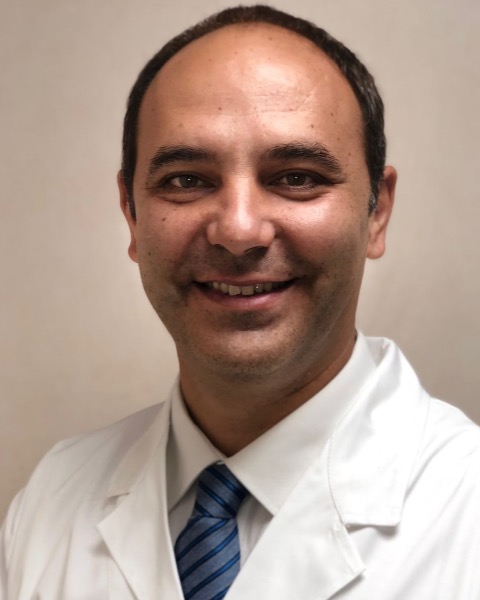
Award: ACG Outstanding Research Award in the Diet, Nutrition, and Obesity Category
Salvatore Francesco Vadalà di Prampero, PhD1, Monika Bulajic, 2, Milutin Bulajic, MD, PhD, FACG1 1Isola Tiberina Hospital - Gemelli Isola, Rome, Lazio, Italy; 2University of Rome, Rome, Lazio, Italy Introduction: Endoscopic Gastroplasty (EG) is an endoscopic therapy to treat obese patients focusing on gastric body remodeling. We considered three different techniques: Endoscopic Sleeve Gastroplasty (ESG), Endoluminal Vertical Gastroplasty (EVG), and distal Primary Obesity Surgery Endoluminal (POSE2). Methods: This was a single center, randomized controlled trial (ClinicalTrials.gov NCT04854317) of obese patients who underwent EG (through ESG or EVG or POSE2) or a low-calorie Mediterranean diet (1600and 1400 Kcal/day). Outcomes included technical success rate, serious adverse event rate, and efficacy of the three EG procedures at inducing weight loss, improving obesity related comorbidities and quality of life (QoL), compared to diet. Results: From July 2020 to May 2022, 240 obese (body mass index 37.5±3.5 kg/m) patients (mean age 46±10 years; females 87.8%; obesity class II 58.3%; hepatic steatosis as the main comorbidity in 70%) underwent EG (60 patients for each procedure, 180 patients in total) or a low-calorie diet (60 patients). In the EG group the technical success rate was 100%. The serious adverseevent rate was 1.1%. The follow-up visit was attended by 100/180 (55.6%), 48/180 (26.7%) and 19/180 (10.6%) patients at 6, 12 and 18 months, respectively. They experienced 16.1%, 13.7% and 14.1% total body weight loss (TBWL) and 39.7%, 35.3% and 34.7% excess weight loss (EWL) at 6, 12 and 18 months, respectively, with no significant difference among the three techniques in both parameters (p >0.62 in TBWL% and p >0.94 in EWL% ANOVA tests) at 18 months follow-up. Concerning the low-calorie diet group, 31/60 (52%), 13/60 (22%) and 4/60 (6%) patients attended their 6, 12 and 18 months follow-up; they experienced 1.1% TBWL (p < 0.001 versus EG group) and 2.3% EWL (p < 0.001 versus EG group) at 18 months. Ninety seven of one hundred (97.0%), 37/48 (77.1%) and 16/19 (84.2%) patients achieved at least 5% TBWL, while 86/100 (86.0%), 32/48 (66.6%) and 15/19 (78.9%) achieved at least 25% EWL in the EG group at 6, 12 and 18 months follow-up, compared to 4/31 (12.9%), 1/13 (7.6%) and 0/4 (0%), and 3/31 (9.7%), 1/13 (7.6%) and 0/4 (0%) in the diet group, at 6, 12 and 18 months. Most comorbiditiesand the QoL, measured by EQ-5D, improved after the EG procedure at 18 months, while no improvement was observed in the diet group. Discussion: EG through ESG, EVG and D-POSE are technically feasible and safe, and appear to be effective for the treatment of obese patients, compared to diet, at a medium term follow-up.
Disclosures: Salvatore Francesco Vadalà di Prampero indicated no relevant financial relationships. Monika Bulajic indicated no relevant financial relationships. Milutin Bulajic indicated no relevant financial relationships.
Salvatore Francesco Vadalà di Prampero, PhD1, Monika Bulajic, 2, Milutin Bulajic, MD, PhD, FACG1, 55, Clinical Outcome at 18 Month Follow-Up of 3 Endoscopic Gastroplasty Techniques: A Single Center, Randomized Controlled Trial, ACG 2025 Annual Scientific Meeting Abstracts. Phoenix, AZ: American College of Gastroenterology.